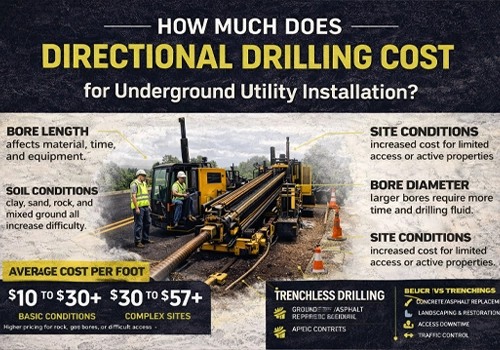
The first question most people ask about trenchless drilling is simple: what does it cost? The real answer is not a single number. It depends on the site, the conditions, and what it takes to complete the job without creating new problems along the way.
Directional drilling cost is influenced by more than just the installation itself. It includes planning, equipment, ground conditions, and everything required to complete the project while protecting the surface above.In many cases, this work is part of a broader directional drilling service approach designed to reduce disruption and maintain control across the entire project.
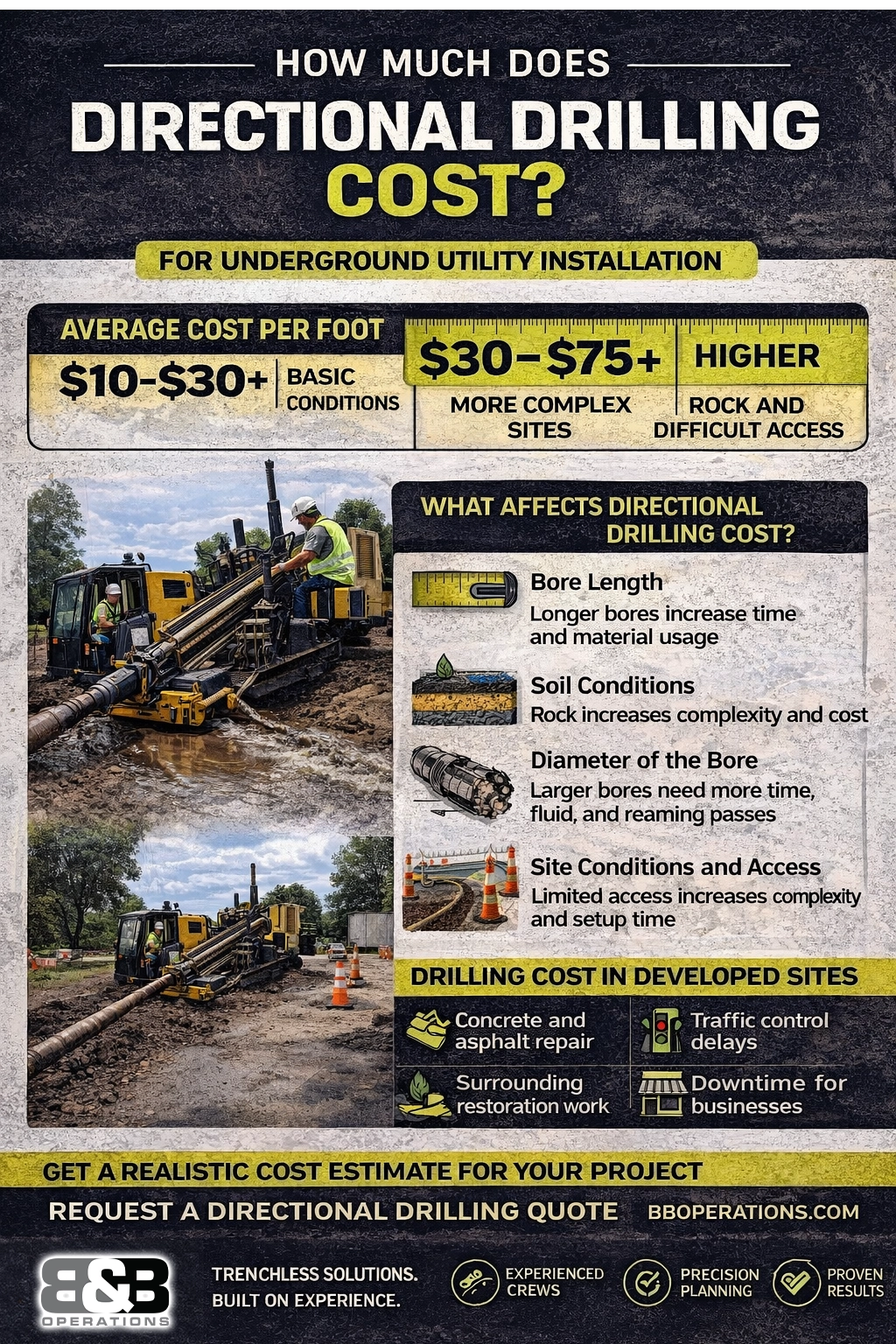
Directional drilling is often priced by the foot, but that number can vary depending on the complexity of the project.
In general, directional drilling costs can range from:
These ranges are not fixed pricing. They are a starting point. Real project costs depend on what the job requires in the field.
One of the biggest misconceptions is comparing drilling and trenching based only on installation cost.
Trenching may appear less expensive at first, but it often includes additional costs:
When these factors are included, trenchless drilling often becomes the more cost-effective solution in developed environments.
For a full comparison, read
when to use trenchless drilling vs trenching for utility installation.
Directional drilling cost is not just about price per foot. It is about the total cost of completing the project without creating additional problems. When surface disruption, restoration, and access are considered, trenchless drilling is often the more efficient and controlled solution.
Every directional drilling project is different. The only way to understand cost is to evaluate the actual site conditions, bore length, and installation requirements.
B&B Operations provides trenchless drilling services for commercial, municipal, and utility projects with clear planning and realistic cost expectations from the start.
Request a directional drilling quote