Not every underground utility project should be handled the same way. Some sites call for open excavation. Others require a method that protects the surface and keeps the surrounding area functional. The real question is not which method sounds better. It is which one makes the most sense for the conditions in front of you.
When utility lines need to be installed underground, contractors usually choose between two methods: trenchless drilling and traditional trenching. Both can get the job done, but they do it in very different ways, and those differences affect surface disruption, restoration, project speed, access, and overall cost.In many developed environments, trenchless work is part of a broader directional drilling service strategy designed to minimize disruption while maintaining control throughout the installation.
Traditional trenching uses open excavation. The ground is cut from one point to another, the utility is placed in the trench, and the surface is restored afterward. This method is straightforward, but it disturbs everything above the utility path.
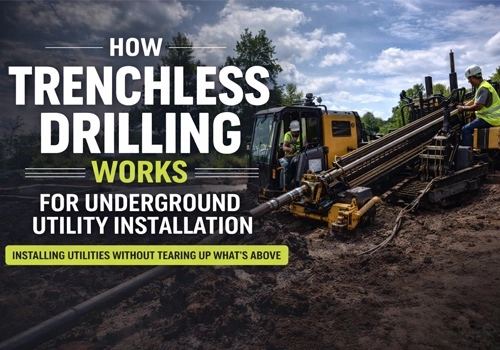
Trenchless drilling works differently. Instead of opening the ground across the full run, a directional drilling rig installs the utility below the surface along a controlled bore path. Entry and exit points are limited, which allows the line to be installed without tearing up the entire area in between.
If you want a closer look at the trenchless process itself, read how trenchless drilling works for underground utility installation.
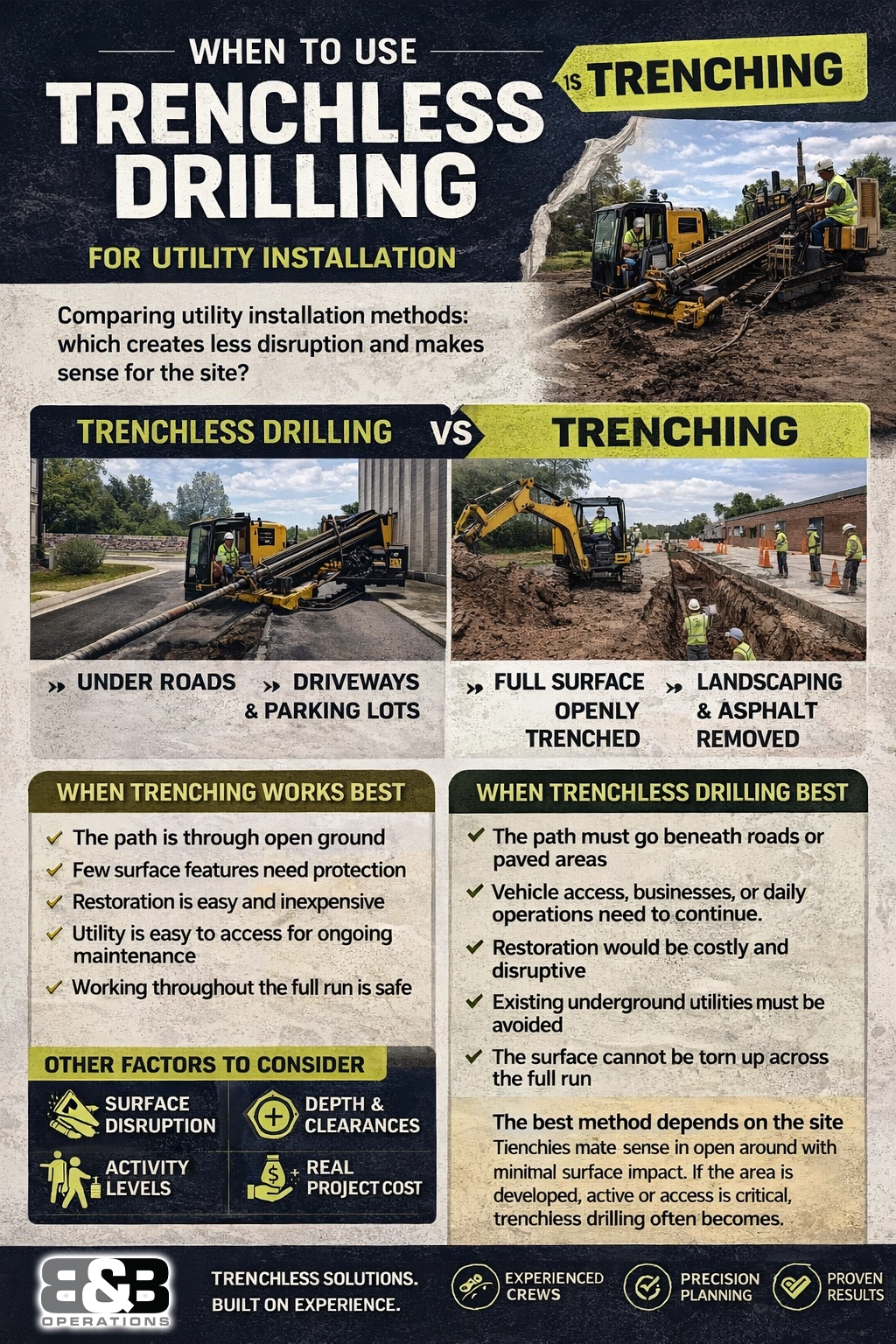
Trenching can still be the right method in the right setting. If the work area is open, access is easy, and surface restoration is not a major concern, trenching may be a practical solution.
Trenching is often considered when:
In undeveloped or less constrained areas, trenching may be efficient because the impact to the surface is not a major issue.
Trenchless drilling becomes the stronger option when the surface matters. If the utility needs to pass beneath roads, driveways, sidewalks, buildings, active commercial sites, or developed corridors, open trenching can create more problems than it solves.
Trenchless drilling is often the better choice when:
In these situations, trenchless drilling protects access, reduces visible disruption, and often keeps the project moving with fewer downstream repairs.
The biggest difference between these two methods is not underground. It is everything happening above the utility line.
Trenching disturbs the full length of the installation path. That means removal of asphalt, concrete, landscaping, or compacted surfaces, followed by restoration when the utility is in place.
Trenchless drilling limits disturbance to controlled entry and exit points. That difference matters on active properties, municipal corridors, and developed commercial sites where shutting down access or rebuilding surfaces adds time and cost.
A common mistake is comparing trenchless drilling and trenching based only on the initial installation price. That leaves out some of the biggest project costs.
Real project cost can include:
Trenching may look less expensive at the front end, but once restoration and disruption are included, trenchless drilling often becomes the better financial decision in developed areas.
For a closer look at the variables that shape pricing,
read more about directional drilling cost and what affects pricing.
Neither method is chosen in a vacuum. Soil conditions play a major role in how the work is planned and performed.
Clay, sand, rock, groundwater, and mixed ground conditions all affect equipment selection, stability, and production speed. A site with poor excavation conditions may still be difficult for trenching, while a highly constrained bore path may require more planning for trenchless work.
The decision is rarely about one method being universally better. It is about matching the method to the site.
Existing underground utilities, road crossings, and required clearances often make trenchless drilling the more controlled solution. When a utility line must pass beneath infrastructure at a planned depth, directional drilling allows crews to follow a designed bore path instead of opening the full surface.
If depth planning is a major part of your project,
learn how deep directional drilling goes and what determines it.
Neither method is automatically better on every project.
Trenching can be effective when the area is open and restoration is not a major concern. Trenchless drilling is usually the better fit when developed surfaces, active operations, access, and restoration costs all need to be protected.
The best method is the one that fits the real conditions of the site, not the one with the simplest label.
The difference between trenchless drilling and trenching is not just how the utility gets installed. It is how much disruption the project creates before the work is done. On open ground, trenching may still make sense. In developed environments where access, surfaces, and surrounding operations matter, trenchless drilling often delivers the better result.
If your project involves underground utilities in a developed area, the installation method can affect cost, schedule, access, and restoration long before the work is finished.
B&B Operations helps commercial, municipal, and utility clients determine when trenchless drilling is the better fit and executes each project with the control needed to keep the surface impact low.
Talk with our directional drilling team